

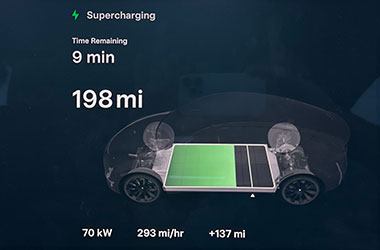
Does frequent fast charging damage an EV battery? There are three common answers to this question and there may be some truth to all of them. Answer 1: Yes. Answer 2: No, and Answer 3 We don’t know yet.
Does frequent fast charging damage an EV battery?
Answer 1.: Yes
Fast charging, Tesla Super Charging, and Level 3 charging are all the same thing. It is DC, or direct current, charging at 150 kW – 350 kW of power through fixed ground stations directly connected to the electrical grid. Most charging takes place on 110 v outlets or 220 v connections which use AC, or alternating current which charges at a significantly lower rate with significantly less heat and demand on the vehicle electrical systems. Several studies maintain that Fast Charging puts more stress on the EV battery systems causing more rapid degradation.
Answer 2.: No
There are a number of studies that show regular Fast Charging shows know significant battery cell degradation over Level 1 and Level 2 methods and many OEMs concur. It’s also in their best interest. But part of the reason they agree that frequent Fast Charging does not damage the battery any more that at-home charging is the BMS. For EVs to accept a high rate of charge they use a BMS, Battery Management System. When activated the BMS prepares the battery for fast charging by warming it up to accept the increased heat that comes with that huge influx of energy. As the battery reaches 80% the rate of charge slows significantly as the BMS manages the extreme heat buildup from fast moving electrons, balances the individual cells within the pack to extend life, and deals with the chemical resistance that occurs as the battery reaches a full charge. OEMs maintain that these systems protect the EV battery chemistry from significant degradation.
Answer 3.: We Don’t Know Yet
Modern fast chargers came online in 2011 and since then both the charging technology and the battery chemistries have changed significantly. There’s no doubt that plugging your EV into 900 volts of energy to load electricity into a large battery at 350 kWs is significant and shouldn’t be taken lightly. But since their inception these chargers and incidents related to them have been insignificant. But the question of whether frequent fast charging damages EV batteries overtime may be unknown today. Part of the reason we don’t know is that, according to Recurrentaccording to Recurrent, we don’t have enough data yet to accurately measure it. It’s also possible that the amount of degradation that occurs with frequent fast charging while not helpful to battery life, is not significantly worse than full-time, at-home charging and therefore should be considered normal use case. And that’s good news because virtually everyone will use a fast charger for their EV. And the tech is getting better. EVs like the Kia EV 6, Hyundai Ioniq 5, Tesla Model 3, and Tesla Model Y, charge from 20% to 80% State of Charge, SoC, in 20 minutes and Shell Oil has just built a car that charges from 20-80% in five minutes.
So while the jury may still be out on whether frequent fast-charging your EV hurts the battery, manufacturers agree that at the time of this post, keeping the State of Charge, SoC, (what percentage of charge the vehicle has at rest.), of your battery between 20%-70/80% protects the battery chemistry and extends the battery’s useful life no matter what EV you currently have. And even though the latest LFP batteries recommend charging to 100% once a week they still maintain that 20-80% is your happy place when it comes to the percentage of charge you have in the vehicle when it is at rest.
Stay up to date on the latest EV battery information when you subscribe to The Current, our free newsletter.